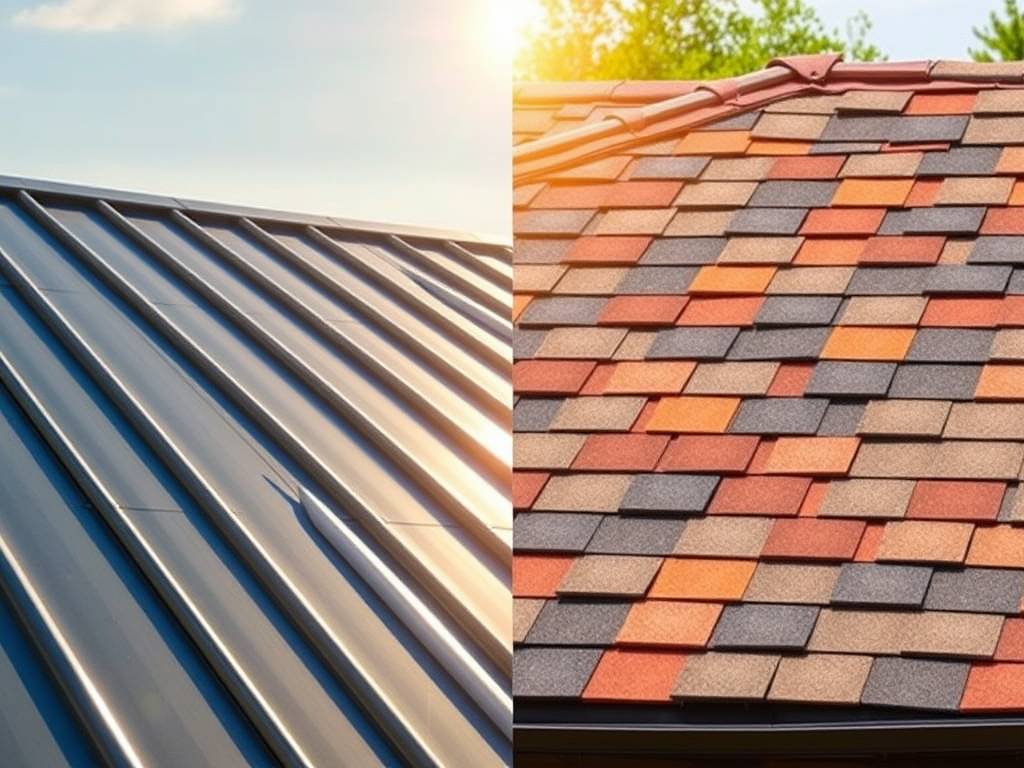
When it comes to protecting your home, the roof is one of the most important investments you’ll make. Whether you’re building from the ground up or replacing an old roof, choosing between a metal roof and a traditional asphalt shingle roof can feel overwhelming.
Each roofing option comes with its own unique benefits—and drawbacks. Let’s break down the differences between the two to help you decide which is right for your home, budget, and long-term goals.
🔨 What Is a Traditional Roof?
Traditional roofing usually refers to asphalt shingles, the most common roofing material in North America. These shingles are made from a base of fiberglass or organic materials, coated with asphalt and topped with ceramic granules.
✅ Pros of Asphalt Shingle Roofs:
- Lower Upfront Cost: One of the biggest advantages is affordability. Asphalt shingles are significantly cheaper to install than metal roofing.
- Easy Installation & Repair: Shingles are relatively easy to install, and repairs are straightforward if a few get damaged.
- Widespread Availability: Because they’re so common, most roofing contractors are highly familiar with asphalt installation.
- Variety of Styles: Available in many colors and designs to match a range of home aesthetics.
❌ Cons of Asphalt Shingle Roofs:
- Shorter Lifespan: Typically lasts 15–30 years, depending on climate and maintenance.
- Less Durable: Can be damaged by wind, hail, and extreme temperature shifts.
- Higher Long-Term Cost: May require multiple replacements over the lifetime of the home.
- Environmental Impact: Made from petroleum products and not easily recyclable.
🏠 What Is a Metal Roof?
Metal roofing is typically made from steel, aluminum, copper, or zinc. It can come in panels or tiles, and can mimic the look of traditional shingles, tiles, or even slate.
✅ Pros of Metal Roofs:
- Exceptional Durability: Metal roofs can last 40–70 years with minimal maintenance.
- Weather Resistance: Excellent protection against rain, snow, wind, and even wildfire.
- Energy Efficiency: Reflects sunlight, reducing cooling costs by up to 25%.
- Environmentally Friendly: Often made from recycled materials and fully recyclable at the end of its life.
- Low Maintenance: Doesn’t crack, split, or suffer from algae growth like shingles can.
❌ Cons of Metal Roofs:
- Higher Upfront Cost: Installation can be 2–3 times more expensive than asphalt shingles.
- Noise: Rain and hail can be louder on a metal roof—though this can be reduced with insulation.
- Denting: While durable, some metals can dent from hail or falling branches.
- Style Limitations in Some Areas: In certain neighborhoods or HOA communities, metal roofs may be less common or even restricted.
⚖️ So, Which One Should You Choose?
The right roof depends on what you value most:
- If budget is your biggest concern, an asphalt roof is a practical and common choice.
- If you’re thinking long-term, want energy savings, and don’t want to replace your roof again, a metal roof might be worth the investment.
- If you live in a storm-prone or wildfire-prone area, metal roofing offers superior protection.
- If you’re looking for a fast, budget-friendly fix, asphalt shingles win out.
🧠 Final Thoughts
Both metal and traditional shingle roofs have their place, and neither is one-size-fits-all. While asphalt shingles remain the most common choice, metal roofing is growing in popularity for homeowners looking for durability, energy savings, and modern appeal.
When choosing your roof, consider climate, budget, long-term plans, and aesthetic preferences. And always consult with a trusted roofing professional to discuss what’s best for your specific home.

 Melinda Tindell Real Estate
Leave a comment